

The alternative homeland
in recent months, discussions about nationality, homeland, immigration, and patriotism have intensified. but what is a homeland? can it be relinquished, or can it simply become a memory?
the philosophical concept of homeland goes beyond the simple linguistic definition of “the place where a person is born or lives,” becoming an emotional and moral bond that encompasses identity, loyalty, and sacrifice.
nationalism is a relatively modern concept, rivaled in importance by loyalty to nationalism or religious doctrines, as seen in some movements such as the muslim brotherhood, where the concept of homeland is absent.
some philosophers consider the homeland an abstract, sacred idea deserving of loyalty. others view it as a negative concept when it transforms into a sense of moral superiority over others, as seen in the ideologies of nazism and fascism.
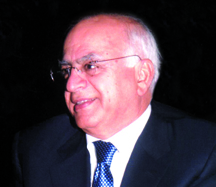
professor qasim al-habashi from aden asks what drives a person to seek an alternative homeland, especially when they are over eighty, as in the case of a friend of his.
it is not easy for anyone to be uprooted from their roots, from the land of childhood, memories, and language. a homeland is not merely a geographical area, yet we see millions of people leaving their countries in search of a place that offers security, dignity, and work.
the root cause of this often lies in the absence of the state in its true sense. migration, especially at an older age, is not a voluntary decision or a fleeting desire to improve one’s standard of living; rather, it is a gradual uprooting from one’s land and a difficult attempt to re-establish oneself in a new land.
by nature, humans are beings who feel loyalty, and the homeland is a psychological and existential extension, a collective memory of small details such as the streets of childhood, the faces of neighbors, the sounds of markets, and even shared sorrows.
therefore, abandoning all of this only occurs when the cost of staying becomes greater than the cost of leaving, and when the homeland itself transforms from a source of security into a source of danger.
here we can identify the core wound of the tragedy of state absence, not as an administrative apparatus, but as the framework that gives life its possible meaning. when the state is absent, society as a whole enters a state of precarious instability.
at that point, there is nothing left to rely on. it is important to understand the basic human needs described by psychologist abraham maslow (1970) in his “hierarchy of needs.”
before reaching self-actualization, individuals must first ensure their survival needs are met, which include food, water, shelter, and security. when these needs are threatened or unstable, thinking about anything else becomes a luxury. security is not a psychological luxury but a fundamental condition for sustaining life.
when security is absent, humans are placed in a constant state of alert and anxiety, unable to plan or achieve stability. this naturally leads to the need for belonging, a sense of being part of a community, recognition, a defined role, and stable relationships.
we observe that in societies torn apart by conflict, these bonds gradually erode, families disintegrate, communities drift apart, and identity itself becomes contested.
at this point, the homeland is no longer capable of embracing its children; rather, it becomes a space that psychologically expels them before it does so physically.
we all live on one planet, breathe the same air, drink the same water, cultivate the same land, and face the same end.
there is no real difference between people except in the extent to which they build just systems that preserve human dignity and protect human rights. only then can we understand the true meaning of distinctions between societies.
the difference is not between races, religions, or peoples, but between just and stable states that protect their citizens and grant them security and freedom, and chaotic, fragmented systems.
a just state does not mean perfection, but rather the existence of stable and predictable rules, where a person does not need intermediaries or narrow affiliations to obtain their rights. this is what we enjoy in kuwait, and it is what we must preserve and further strengthen.